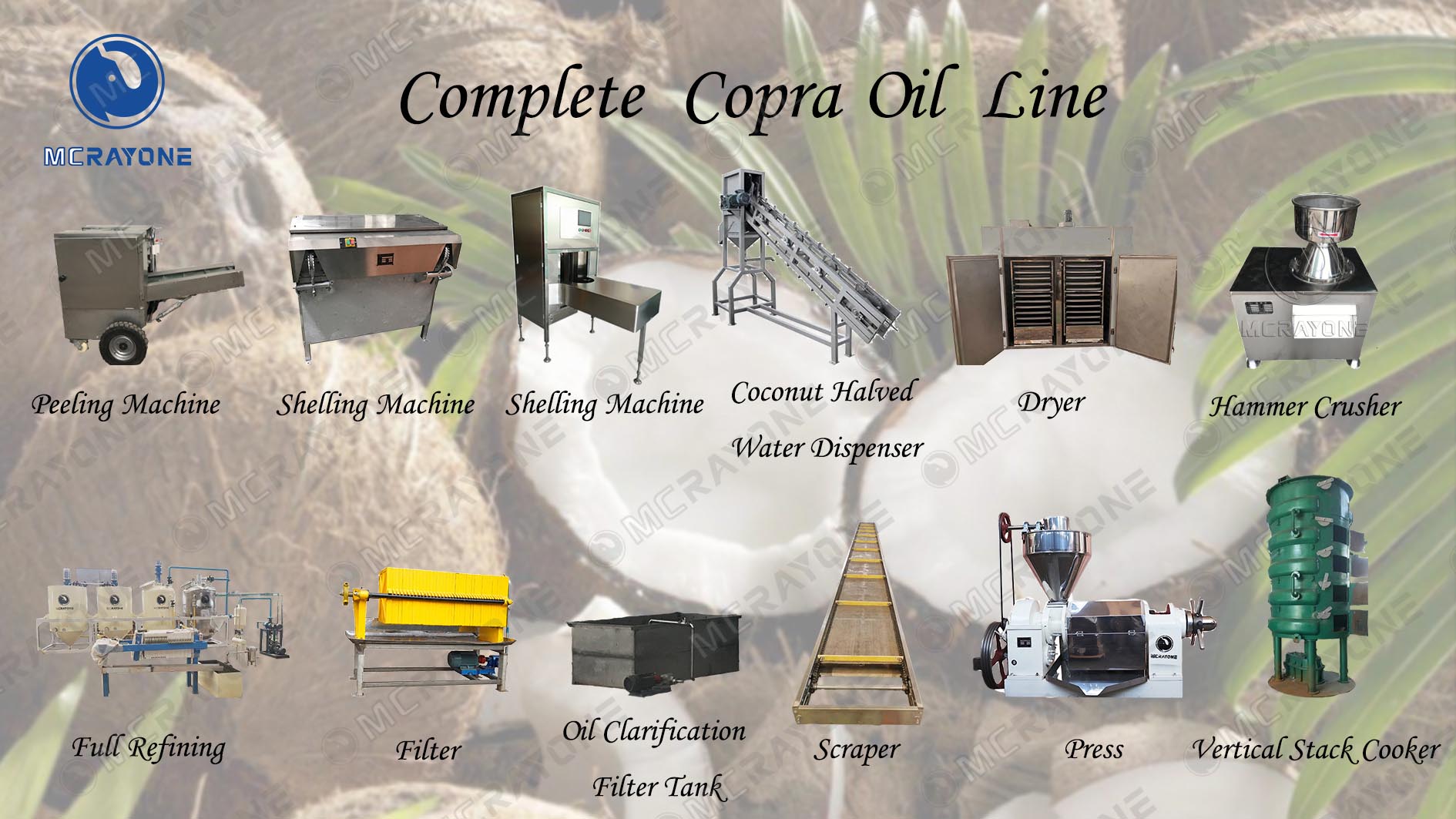
Coconut trees are widely distributed in most subtropical and tropical regions. Due to the high oil content, rich protein, and dietary fiber in its flesh, coconut oil has become an extremely popular edible oil in recent years. Coconut oil can be mixed into coffee to increase satiety while aiding the body in absorbing protein, fiber, and trace elements. It can also be used for skincare and mouthwash to keep skin moisturized and remove bacteria and dirt from the mouth. Furthermore, it can be used as a hair conditioner to repair damaged hair.
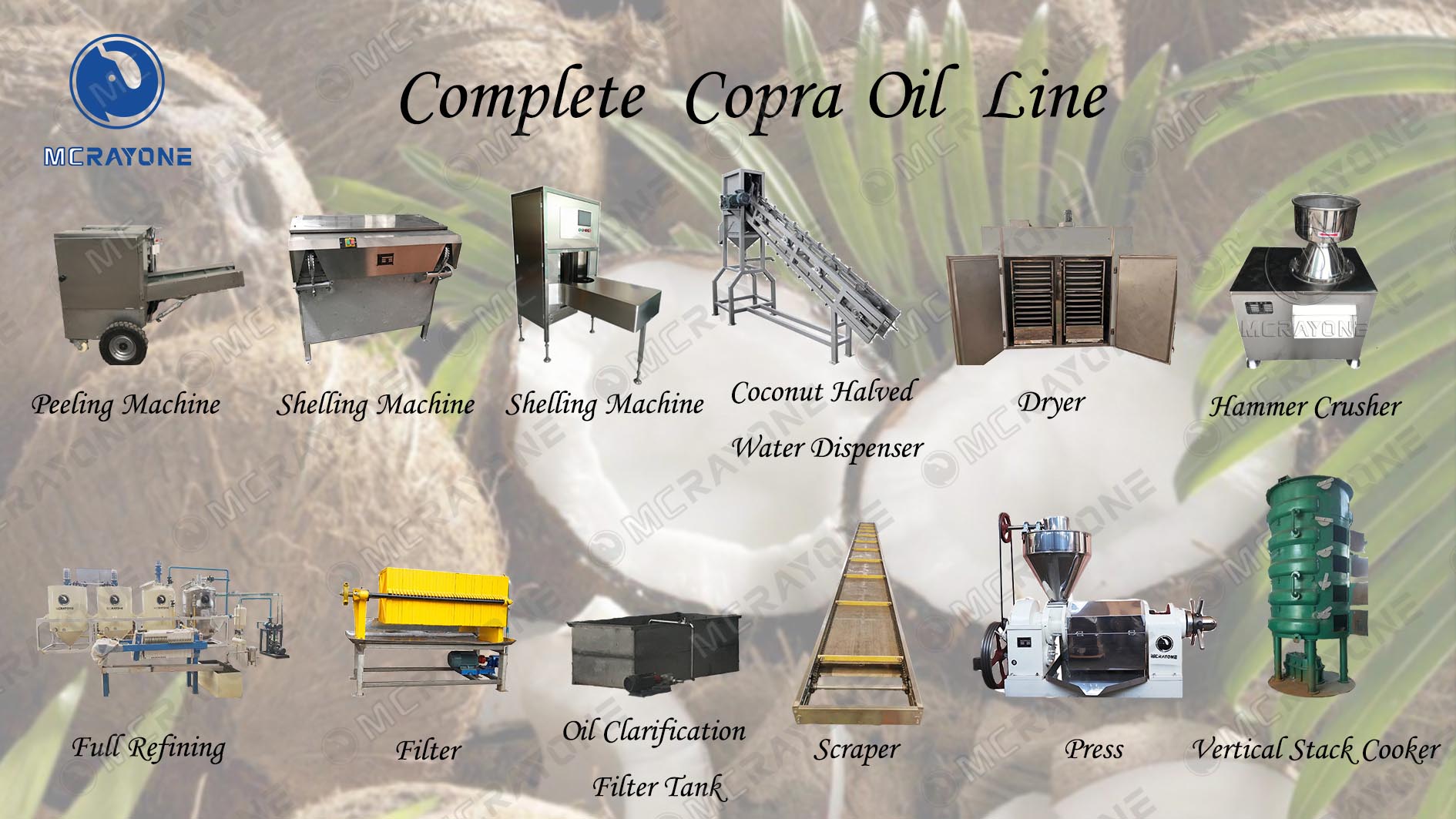
First, whole coconuts are placed in a coconut peeler to remove the hard outer shell. Then, the fresh coconuts are placed in a device to evaporate the moisture. The dried coconut is then processed in a crusher (or manually crushed) before being poured into a screw press to extract the oil using traditional physical pressing methods. After obtaining the initial pressed coconut oil, it is usually placed in a plate and frame filter press to remove some solid impurities, yielding crude oil and coconut meal. The latter can be used as feed or fertilizer, while the former crude oil can be sold directly or further refined to meet the needs of the European and American markets, depending on demand and policy requirements.