Cottonseed oil is rich in unsaturated fatty acids, especially linoleic acid, which helps maintain cardiovascular health. In addition, cottonseed oil contains vitamin E, which has antioxidant properties and helps protect cells from free radical damage. Moderate intake of cottonseed oil can provide energy and support healthy skin and hair. So how is cottonseed oil produced?
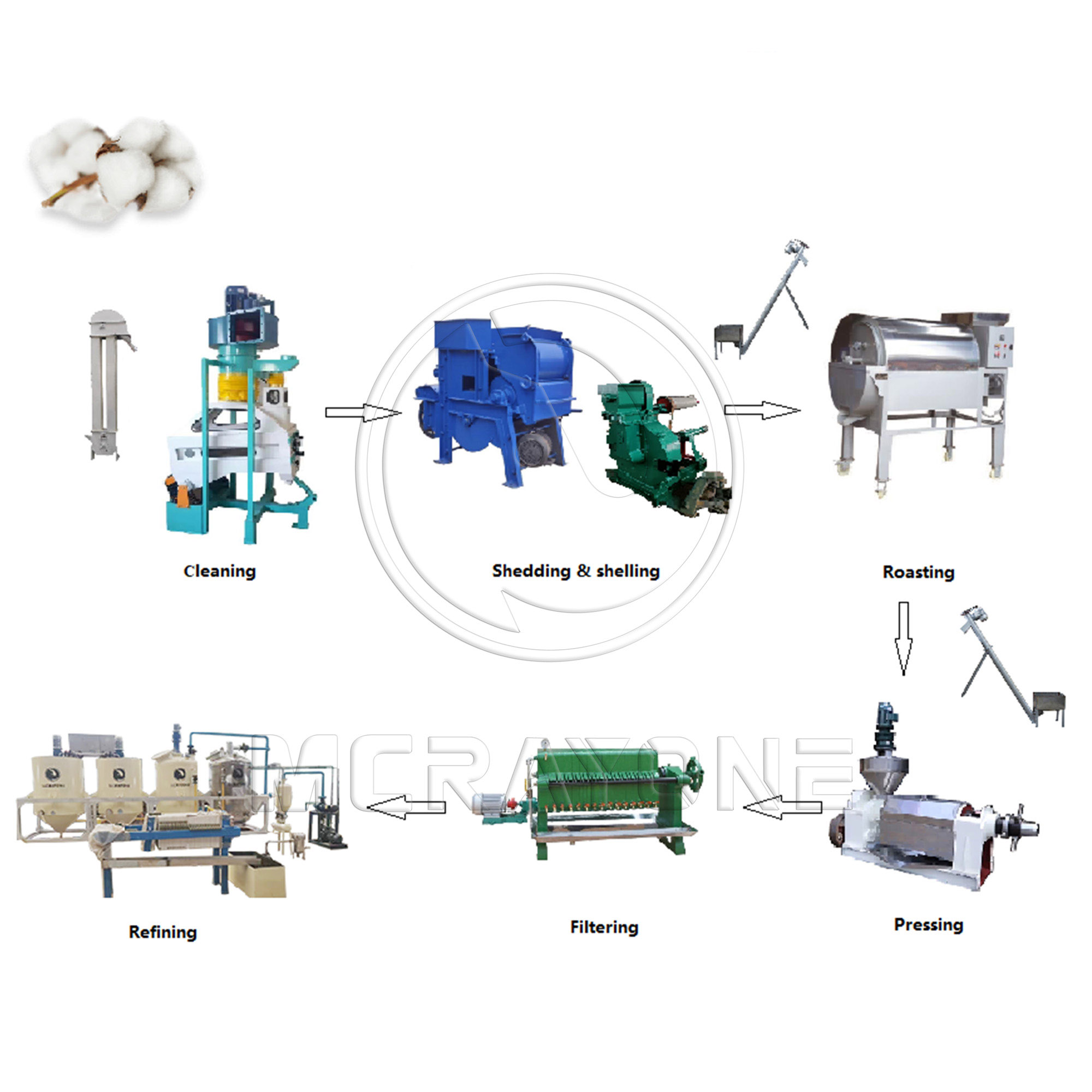
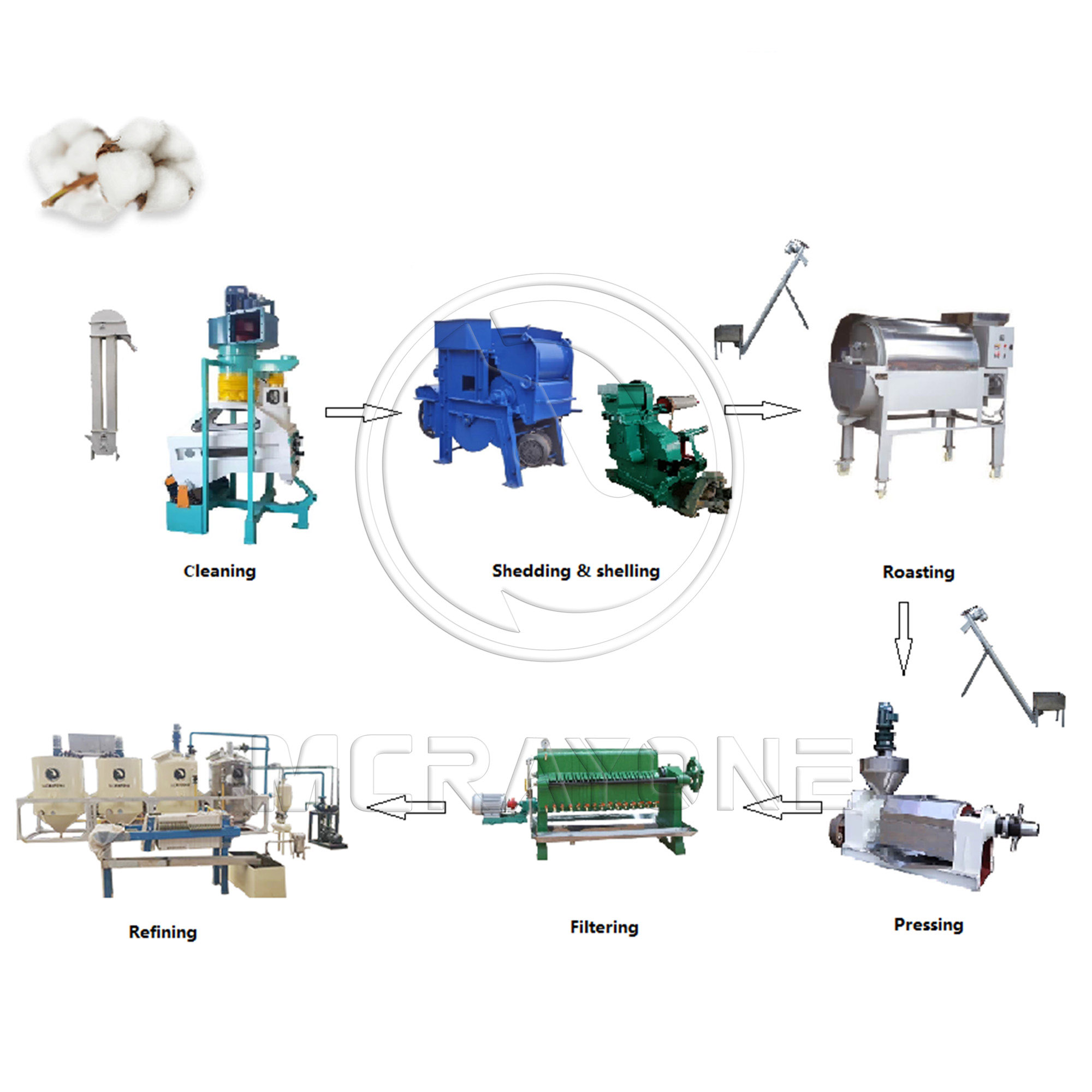
First, the harvested cottonseed is passed through a vibrating screen to remove impurities such as straw, sand, and metal. Then, the cottonseed is delinted; this step facilitates subsequent processing. Next, the delinted cottonseed is poured into specialized hulling equipment to break open the husks. Finally, air separation and sieving techniques are used to separate the seeds from the husks. The separated cottonseed hulls can be used as fuel or feed. The processed cottonseed kernels are steamed in a cooker to denature and coagulate the proteins, reducing oil viscosity and promoting the binding of gossypol with proteins, thus lowering the free gossypol content and improving the quality of the crude oil. The pre-treated cottonseed is then mechanically pressed in a screw press to extract crude cottonseed oil and cottonseed meal. Finally, the pressed crude cottonseed oil is filtered in a plate and frame filter press to remove solid impurities. Final refining can be selected based on market and government requirements.